

Johanna Stauffer: Food affiliate marketing, AI & 2026 food trends
Interview with Johanna Stauffer, founder of the blog Une Case en Plus
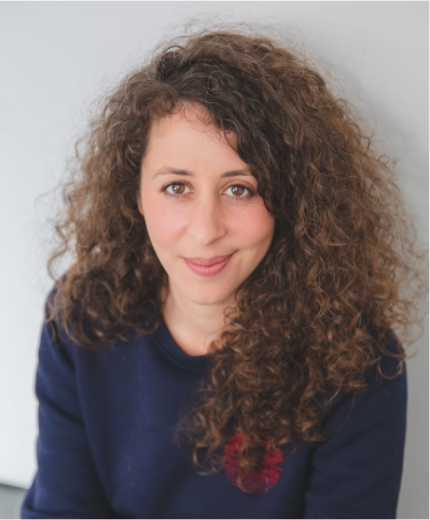
Une Case En Plus is a lifestyle French blog covering conscious consumption, art, culture, food, travel, and entrepreneurship. It’s a space dedicated to everything that feeds curiosity and inspires a more meaningful way of living.
What role does Artificial Intelligence (AI) play in your content strategy, SEO optimization, or monetization?
AI primarily acts as an idea generator for me. It helps me identify new content angles, organize my topics, and create detailed outlines when I’m preparing to write. Regarding SEO, I use it to research and cluster keywords, which allows me to structure my content more effectively and integrate the right expressions in the right places. However, it remains a brainstorming tool: AI enriches my analysis, but it doesn’t write for me.
Have you already adapted your visibility strategies for the era of conversational engines (LLMs, SGE, ChatGPT, Perplexity…)?
Yes. I’ve added enriched content to my web pages, such as FAQs or “Key Takeaways” blocks, and I’ve updated several old articles to adapt them to these new formats. These optimizations have a real impact: the content becomes clearer and better structured, gaining better visibility within conversational search engines.
What levers or best practices do you find most effective today for maximizing the ROI of affiliate campaigns?
In my opinion, the most important thing is to work with brands that truly resonate with your readership and target audience. Without that consistency, conversion isn’t possible. Affiliate marketing relies above all on the relevance between the reader’s needs and the brand’s offering.
How have new regulations on influencer marketing (the 2023 law, UMICC charters) transformed your collaborations?
They haven’t really changed the way I work because I was already completely transparent on the blog. This transparency is a guarantee of trust for my readers. On the contrary, these regulations reinforce the quality of the relationship with those who consume my content.
How do you balance transparency, creativity, and performance?
By maintaining a sincere voice. Given the sheer volume of promotions and the scandals linked to the influencer industry, authenticity has become essential. It’s what allows me to remain creative and credible while still delivering performance.
What mistakes or misconceptions do you still see from brands? What advice would you give to avoid them?
Many brands still prioritize social media, even though the blog format offers a much longer lifespan. The two are complementary, but a blog remains an essential medium—especially since AI-driven SEO highlights structured blog content much more than social media posts.
What emerging trends are you observing for 2026 in your ecosystem?
I’m seeing a strong surge in natural products, small-scale producers, and a return to craftsmanship. Consumers are moving toward less mainstream, more original, and more authentic offerings.
What percentage of your overall income does affiliate marketing represent today? How do you see it evolving?
Affiliate marketing represents about 80% of my income. However, Google’s new layouts—rich results, information blocks, advertising—are having a downward impact on my revenue. That said, I’ve noticed many major brands returning to the fundamentals: the blog, thanks to its longevity and its ability to drive long-term traffic.
In your opinion, what are the advantages of collaborating with a platform like Affilae?
I really appreciate Affilae. I was already using the platform back when I had my own brand, and I’ve always found the experience more user-friendly and authentic than on other platforms. These are indispensable qualities in the food and blogging affiliate space. The relationship creates a sense of proximity that I don’t feel as much elsewhere. The interface is well-designed, the messaging system allows for quick responses, and the growth and reporting tools are truly useful.
What will be your highlights or major projects for the next 12 months?
I want to put more focus on small brands. I love interacting with them, supporting them, and watching them grow—it’s a more human and rewarding process. With big brands, you often get lost in the shuffle. Highlighting smaller players allows me to position myself better and provide more value.


