Can you introduce yourself and tell us about your background?
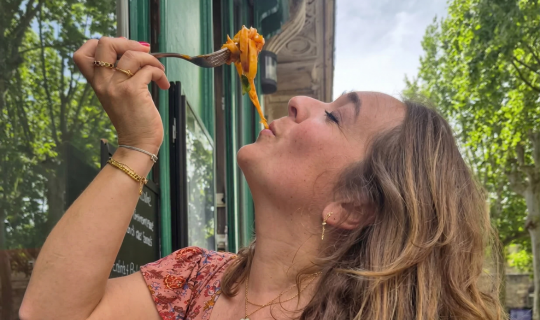
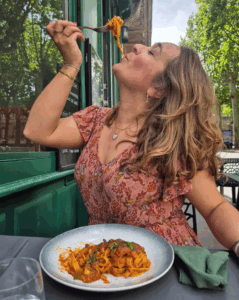
Before I became a full-time creator, I was deep in the world of PR and local culture. My time at Yelp was the real catalyst—it connected me with the local blogging scene and pushed me to launch Camille in Bordeaux.
I’ve lived in the Landes region for seven years now, but my heart and my work remain deeply tied to Bordeaux. At first, I was worried that living in the countryside would hurt my “city” brand. Instead, I discovered that people in Bordeaux are obsessed with the Landes lifestyle! I’m back in the city every single week, so even though my house is in the woods, my content remains 100% local and authentic. I’ve been doing this for 11 years, and I’ve been full-time since 2018.
What does your daily life as a creator look like?
I’m a true “solopreneur.” I handle everything: from billing and negotiating to scriptwriting and video editing. Beyond my social media, I also share my local expertise by teaching digital marketing at INSEEC and writing for Tout le Vin, where I highlight the best local wine bars and pairings. It’s a lot of work, but being the sole voice behind my brand is what keeps it genuine.

How do you choose the brands you work with?
This is where I’m very strict. For over a decade, I’ve turned down the vast majority of offers that came my way. My community trusts me because I only promote what I’ve actually tested and loved.
A huge turning point was filming with Eva Longoria. It brought a massive wave of visibility (7,000 new followers in a week!), but it didn’t change my philosophy. I still only accept collaborations that feel like a natural extension of my life—like my work with the TER (regional trains) to create local city guides. These are the projects I used to dream about because they serve my local community.
What makes a collaboration truly successful in your eyes?
It all comes down to trust and creative freedom. When a brand picks me because they actually know my work, they give me the space to be myself. If a campaign is too “locked down” or corporate, the soul of the content disappears.
An authentic collaboration is one where I can speak to my followers like I’m talking to a friend. If I’m just reading a script, I’m not a creator anymore; I’m just a billboard.
Have you seen brand expectations evolve over the last few years?
Yes, enormously, especially regarding formats. We’ve moved from blog posts to Stories, then to static posts, and now mostly to Reels. We’ve shifted from a “print media” style to expectations focused more on photography and, increasingly, video. Brands are also understanding how influencer marketing works much better now.
They are more aware of the competition too—often, I’m told right from the start that several creators are in the running and that they are comparing options.
What mistakes do brands still make too often in their collaborations with creators?
The first mistake, simple but frequent, is sending a greeting without any personalization or getting my name wrong. It immediately creates a bad impression. Then there’s the lack of trust: too many back-and-forths and corrections, sometimes on tiny details that strip all spontaneity from the content.
There is also often an internal communication problem. The person who chose you on the brand side isn’t always aligned with the teams on the ground, like sales staff or shop managers. This can lead to complicated situations.
What are the limitations of paid collaborations compared to affiliate marketing?
Paid collaborations often lack consistency: one campaign, and then nothing. There are also sometimes heavy constraints on freedom of speech, as well as a non-negligible administrative burden.
What more could affiliate marketing bring to you?
Affiliation would allow me to talk about brands that I don’t necessarily mention today, simply because I bought them myself and use them daily. It would open up new content ideas and greatly expand my possibilities, with more freedom and potentially more long-term consistency.